
Women with fibromyalgia have 28% less energy in their muscles. This isn't ordinary tiredness.
A Swedish MRI study brought this to light. Decades earlier, in a small Texan journal, two American doctors had already found a clue. Here's what happened next.
By Dr William Harrington
By Dr William Harrington

I will probably antagonise every general practitioner and representative of the pharmaceutical industry in New Zealand with this.
What I am about to tell you could even cost me my registration with the Medical Council of New Zealand.
Last month, a 54-year-old woman from Hamilton was sitting across from me. Her name was Pauline. With trembling hands, she told me she didn't know how much longer she could carry on like this.
She had been taking a nerve-pain medication for six years.
Because of that medication, she had gained nearly 16 kilos, without being able to lose them. Her ankles swelled up so severely that fluid leaked from her skin. And the fog in her head had become so bad that one day she stood in her own kitchen and could no longer remember the word 'kettle'.
Then her GP called her in January. She had to stop taking the medication due to new national guidelines.
Then she said something I will never forget:
I just want to be able to be a grandmother again.
Are you a woman in New Zealand and have you been told that it is "just fibromyalgia"?
Were you prescribed a nerve-pain medication, and did you end up feeling sicker from the medication than from the condition itself?
Has your GP called you recently to slowly taper off the only medication keeping you going?
I am Dr William Harrington. I trained in Auckland and have been working as a GP in New Zealand for twelve years.
But first, I want to tell you about the day Pauline broke me.
The patient who reached the limit for me

Six years on a nerve-pain medication. On top of that, two years on an earlier medication.
This was followed by a miserable three-week trial period with a second medication, which ended with what she herself called 'electric shocks in her head'.
Nothing helped. Some treatments even made her symptoms worse.
The pain specialist charged NZ$370 per appointment. After three consultations, he merely shrugged his shoulders. At the pain clinic, she was prescribed the highest permitted dose of her nerve-pain medication.
Pauline did not belong with that one patient.
And then she also had to stop her medication because of the new guidelines.
And I started reading.
The discovery that made me want to smash my screen
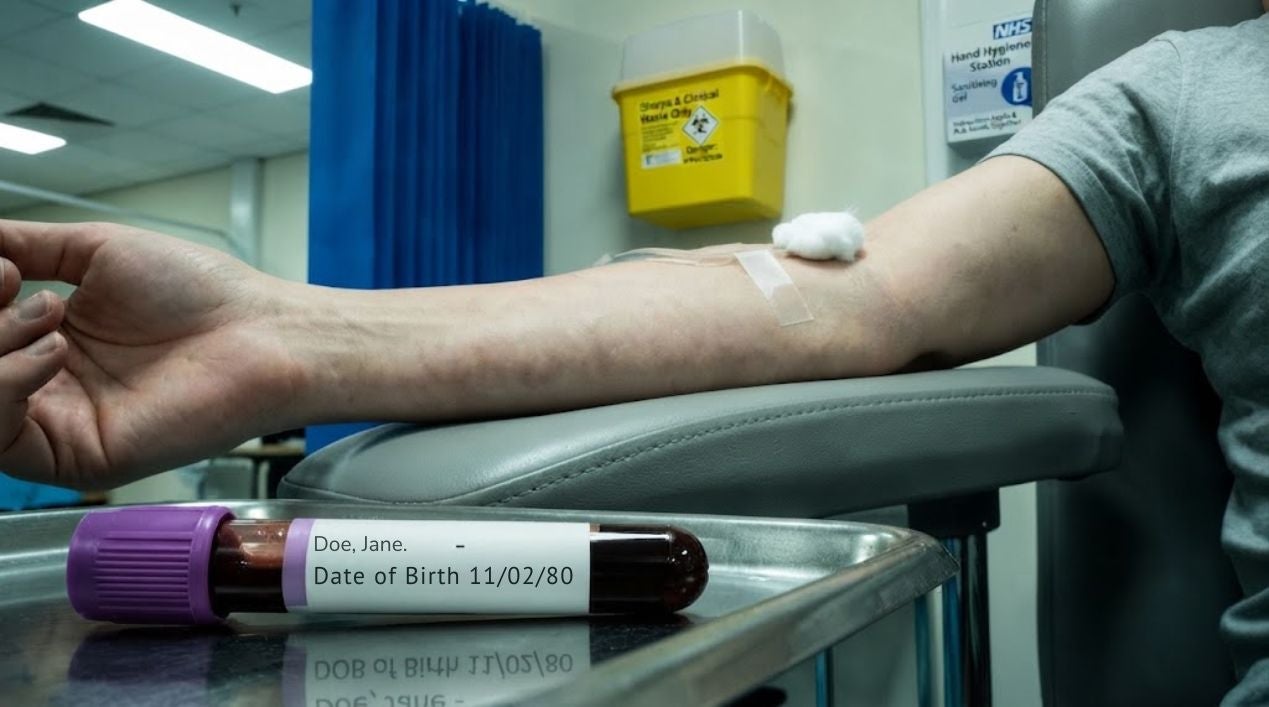
I ploughed through studies from leading universities and clinics in Sweden and the United States, and a virtually forgotten scientific journal.
I spent more than NZ$15,800 on access to tests, biochemistry tutoring, and a private laboratory that performed mineral analyses on people with fibromyalgia. My wife thought I had completely lost my mind.
What I discovered made me so angry that I wanted to throw my laptop across the room.
The entire New Zealand treatment model for fibromyalgia is based on a lie.
A lie that keeps women like Pauline sick and ashamed, while they repeatedly pick up a prescription for a drug made by a company that has previously paid record fines to US regulators for misleading marketing of its medicines.
This is what they would rather you didn't know:
The pain does not originate in your muscles.
Not in your joints.
And not between your ears either.
A tiny molecular switch in your spinal cord, the NMDA receptor, may be one contributing factor.
And the mineral that should keep this switch closed is no longer present in sufficient quantities in your body.
The most striking thing?
This deficiency is often not detected with a standard blood test.
The real cause of pain in fibromyalgia

Imagine a grapevine.
A healthy nervous system resembles a beautiful, green grapevine that runs up the inside of your spinal cord.
Every sensation from your body travels via this tendril to your brain. The warmth of a cup of tea against your hand, a hug from your grandson, or the soft duvet touching your hip.
They are tiny molecular switches that determine how strong each signal becomes before it reaches your brain.
Magnesium sits in the NMDA receptor like a stopper in an opening.
When necessary, it comes loose briefly. Then it snaps back into place.
Every signal that travels up the rank is amplified.
A soft whisper from your skin turns into a deafening scream in your brain.
Researchers call this central sensitisation. The volume knob for pain in your spinal cord is, so to speak, permanently turned up to the highest setting.
And it remains so high because the mineral that normally lowers the volume is insufficiently present.
That is why the pain feels the way it feels.
That is why a duvet can feel like sandpaper.
That is why even a hug from your grandson can hurt.
But beneath that lies a second problem.
In 2013, a Swedish research team placed nineteen women with fibromyalgia in an MRI scanner. The researchers measured how much energy was actually present in their muscle cells.
What they discovered should have been on the front page of every newspaper.
ATP levels were 28 percent lower than normal.
Twenty-eight percent.
ATP is the fuel on which every cell in your body runs.
The muscles of someone with fibromyalgia are therefore, as it were, trying to run a marathon with almost a third less fuel.
That is not laziness.
That is not depression.
That is an energy deficit at the cellular level.
And which two substances does your body need to produce ATP?
Magnesium.
And a small organic acid called malic acid.
Two substances your GP has probably never spoken to you about.
Moreover, a scientific review from 2021 confirmed that magnesium is one of the most widely used supplements among people with fibromyalgia for good reason.
The study in question has since been cited in hundreds of scientific publications.
But this is the hard truth:
There is hardly any money to be made from correcting a mineral deficiency.
You cannot apply for a patent on a mineral. And you cannot make the healthcare system pay NZ$370 per consultation for a nutrient that costs less than NZ$2.
So women in New Zealand keep going round in the same vicious circle:
GP → nerve-pain medication → weight gain → a second medication → electric shocks to the head → an earlier medication → "Have you tried mindfulness yet?" → and all over again.
Actually, it is a brilliant system.
At least, if you view the suffering of women primarily as a business model.
The forgotten protocol from Texas that disappeared without a trace in 1992

This is the part that actually should have made headlines.
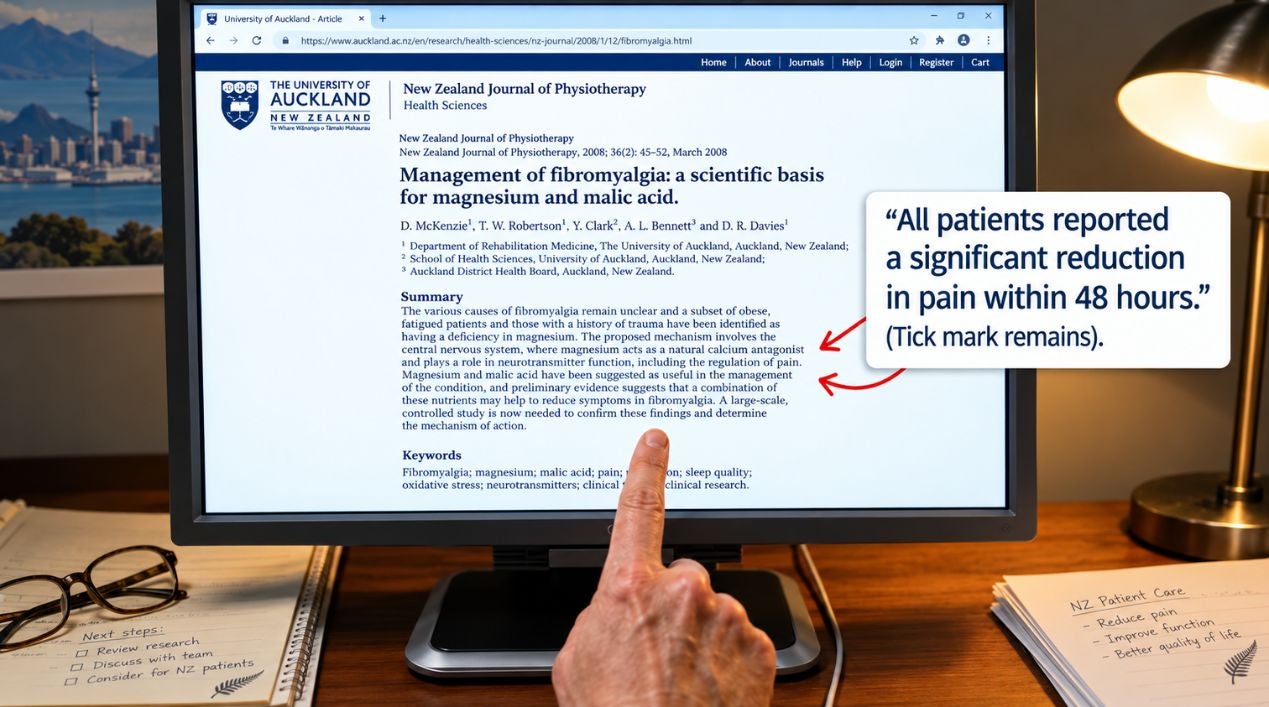
In 1992, two American physicians, Dr Guy Abraham, an American endocrinologist, and Dr. Joris Flechas, published a study on fibromyalgia in a small Texan journal called the Journal of Nutritional Medicine.
They gave fifteen women a specific combination of magnesium and malic acid.
All fifteen women reported a clear decrease in their pain.
Within 48 hours.
In 1995, researcher Robert Russell and his colleagues conducted a follow-up study.
When the dosage was increased, the measured pain scores decreased significantly.
The researchers recommended further investigation of the protocol.That follow-up investigation never took place.
Why not?
Because the approval of this nerve-pain medication was still only a few years away. When it was approved for fibromyalgia in 2007, a magnesium protocol costing about as much as a takeaway meal was suddenly no longer interesting to the people in expensive suits.
For thirty-three years, that knowledge just lay there.
While women like Pauline retained more and more fluid, lost their jobs, hid empty medicine strips at the bottom of the bin, and lay crying on the couch with a heating pad.
The breakthrough that is making the healthcare industry quite nervous
To tackle fibromyalgia pain at the source, three things must happen simultaneously:
1
Support the body's natural regulation
2
Replenish the energy reserves of the muscle cells.
For this, the citric acid cycle, the engine in every cell, must be supported by both magnesium and malic acid. Precisely the combination the researchers used in 1992.
3
Support nerve conduction throughout the body.
If you miss even one of these three parts, you are wasting your time.
This may be why some cheaper magnesium products don't seem to work.
That is like trying to fill a petrol tank through the exhaust.
And that is why the second type of medication tries to suppress the pain by influencing serotonin levels earlier in the process without ever addressing what amplifies the pain signal further down the line.
All three mechanisms must be supported simultaneously.
With the right shapes.
And in the correct dosages.
A true threefold restoration of nerve function.
And that was exactly what I eventually went looking for.
If you antagonise an industry worth billions, they will come after you.

A month later, a representative of a pharmaceutical company, whom I had known for nine years, walked past me at a conference as if she didn't see me.
They wanted to get rid of me
One simple capsule that:
✅ Addressed the CAUSE of the pain, instead of merely suppressing the symptoms.
✅ Worked within a few days, without endless appointments.
✅ Cost less than one cup of coffee per day.
✅ Gave women the opportunity to work on their recovery at home, right from their own kitchen.
The brand that I now recommend to all my patients with fibromyalgia
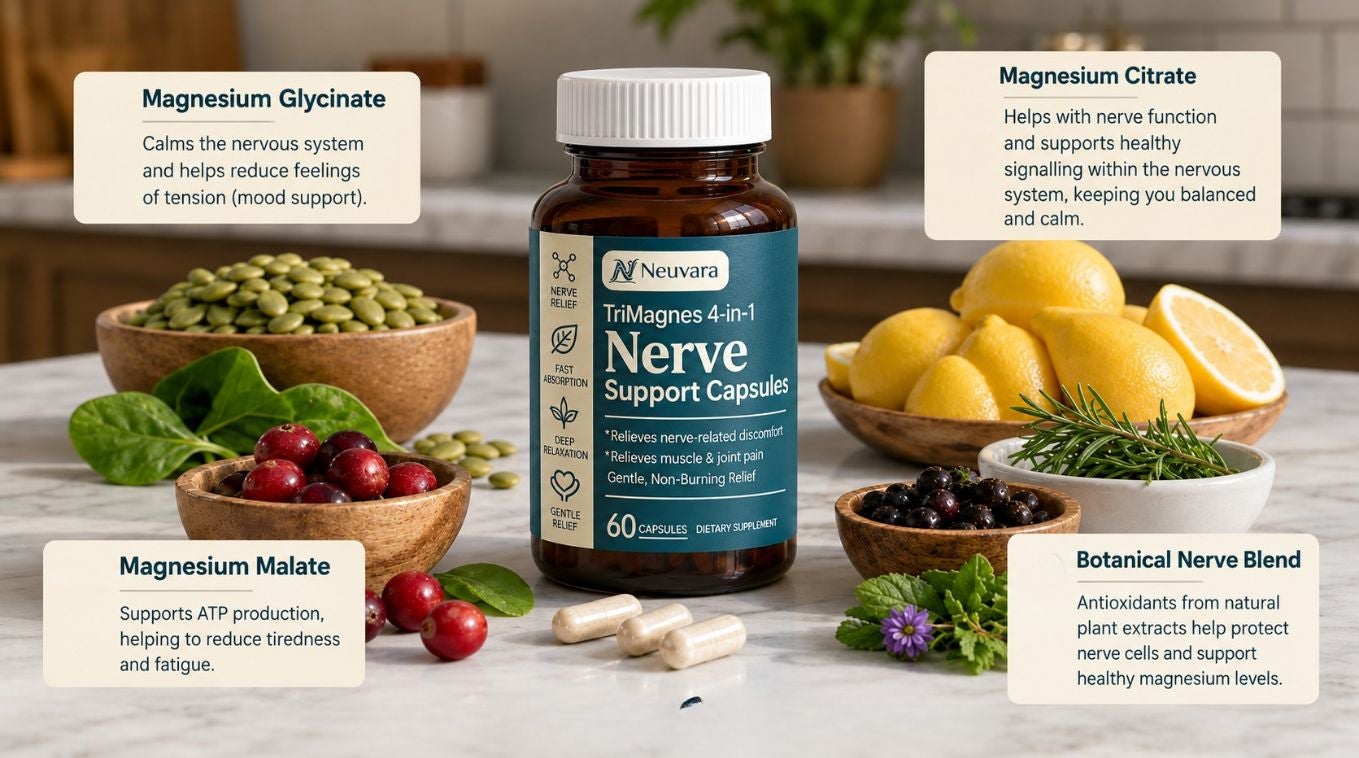
It is called Neuvara.
I didn't develop it. That was done by a small New Zealand team of biochemists at a GMP-certified production site just outside Auckland.
They had been working on this formula in complete silence for almost three years before I even heard from them.
Neuvara is, in fact, the only four-in-one magnesium complex in New Zealand that meets all four conditions for long-lasting relief of fibromyalgia symptoms:

Magnesium bisglycinate
A widely used form that can cross the blood-brain barrier in clinically relevant amounts. Magnesium helps block NMDA receptors in the spinal cord, thereby supporting the natural regulation of pain signals. Glycine, the substance to which the magnesium is bound, also supports deeper and more restful sleep via the GABA system.

Magnesium malate
Magnesium bound to malic acid, precisely the combination that Abraham and Flechas investigated in 1992. Malate supports the citric acid cycle, the process by which your cells produce energy. Magnesium is involved in supporting normal energy metabolism in cells. Together, they support the restoration of energy production in the muscles and help replenish the reported energy deficit of 28 percent measured by Gerdle's research team in 2013.

Magnesium citrate
A highly absorbable form of magnesium suitable for replenishing magnesium levels throughout the body and supporting normal nerve conduction. This form was also used in a 2013 study involving sixty women. Clear improvements were reported in the number of painful pressure points, the impact score of fibromyalgia, and depressive symptoms.

A botanical complex to support the nerves
A carefully formulated blend of adaptogenic plant extracts selected to help calm the overactive stress response that Pauline and many other women have been living with for years.
A botanical complex to support the nerves
A carefully formulated blend of adaptogenic plant extracts selected to help calm the overactive stress response that Pauline and many other women have been living with for years.
All four. Working together in one capsule from
You take two with your morning coffee or tea. Then you let the formula do its work.
No appointments. No worries about repeat prescriptions. No changing guidelines that you suddenly no longer meet.
Just your nervous system finally getting what it's been asking for all this time:
Magnesium. Malate. Rest.
What I discovered about this company before I referred even a single patient to them
I normally never recommend supplements.
I called the founder personally and asked critical questions.
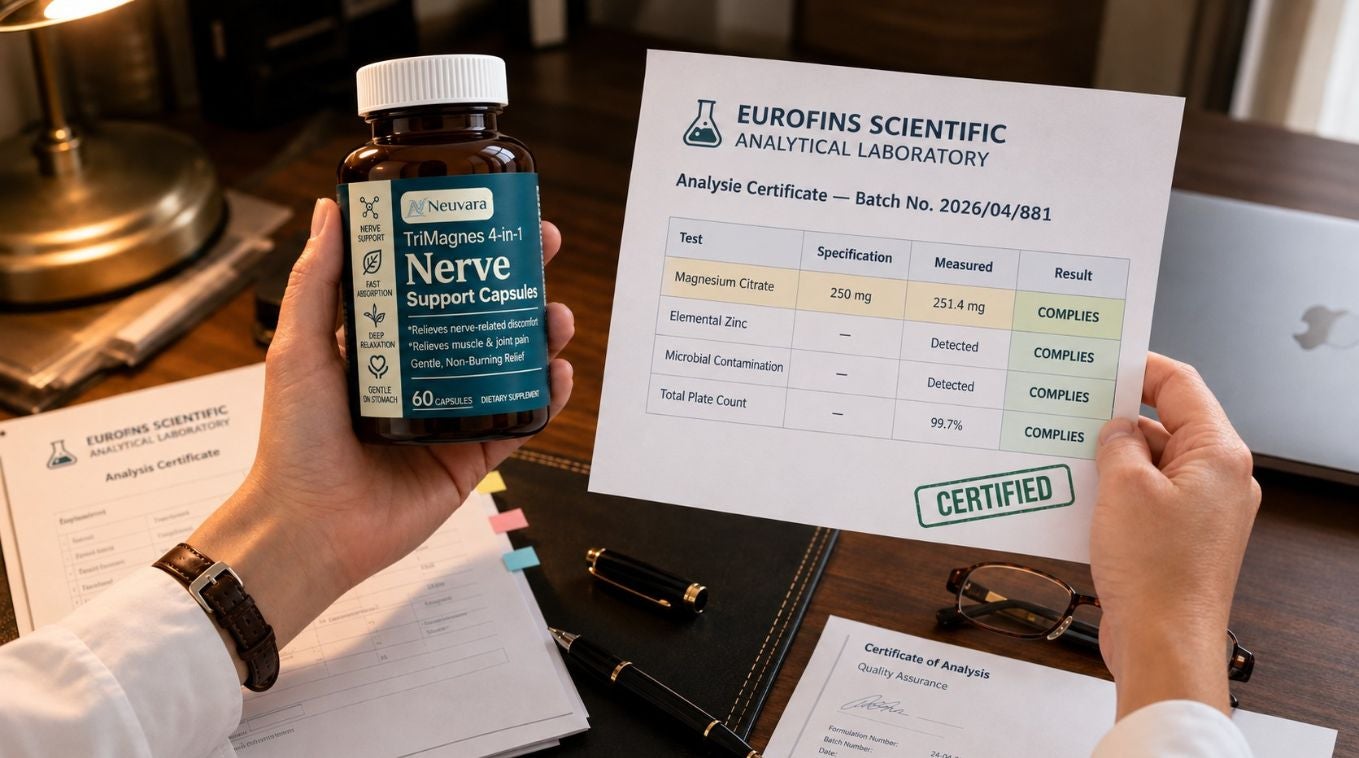
I wanted to see the laboratory's certifications.
I wanted to know why the return rate was so low.
This is what I discovered:



Customer service is quick to respond and refunds are processed within 48 hours.
In twelve years, I have seen enough supplement companies that cut corners on quality.
This company does not do that.
And that is why I dare to link my name to theirs.
How Neuvara may help support fibromyalgia symptoms within 7 days

When you take two Neuvara capsules in the morning with your coffee or tea, according to the formula, the following happens in your body:
Hours 1 to 6: the replenishment phase
The magnesium enters the muscle cells and the production of ATP begins to increase.
Many women describe this as a gentle warmth. As if an engine that ran too cold for years is finally reaching the right temperature.
Day 1 to 3: the recovery phase
The bisglycinate form begins to cross the blood-brain barrier.
The nervous system may gradually respond to replenished magnesium levels.
And then another one.
Your sleep becomes deeper.
Days 5 to 7: the stabilisation phase
The magnesium level in the cells is further replenished and sensitive pressure points become less painful.
The feeling of an engine that just keeps running diminishes.
Many women say that they turn on the kettle again without thinking.
That they lift their grandchildren without bracing themselves first.
And after 60 days?
You walk into your own kitchen on a Tuesday morning. Your husband looks at you over his cup of tea and says:
You look different this week. Did you sleep better?
Not six hours of relief, like with a nerve-pain tablet.
Not flattened and numbed, as with the second type of medication.
But truly yourself again.
What thousands of New Zealand women experience with Neuvara
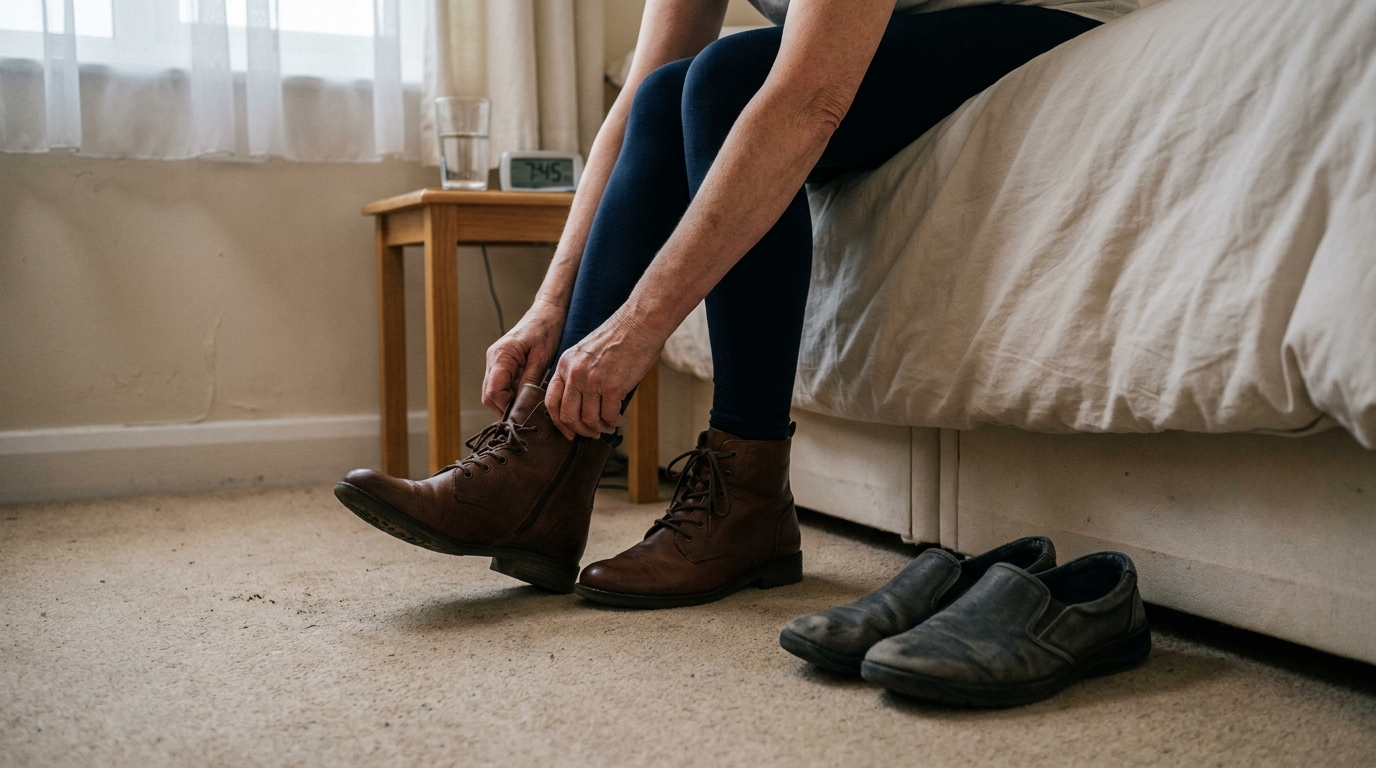
Over the past eighteen months, thousands of New Zealand women have used Neuvara for fibromyalgia and related chronic pain.
Before I wrote even a single word about this product, I asked the team to share their numbers with me.
They sent me this:
The large majority reported a noticeable decrease in pain intensity within the first 30 days.
The majority used fewer over-the-counter painkillers or no longer needed them at all.
Many scheduled appointments at the pain clinic were cancelled.
But the figure that really convinced me?
The return rate is remarkably low.
Very few women ever return the product.
And to be honest, in two cases that was because the delivery driver had left the package in the rain.
But you don't have to take my word for it.
This is what real women from all over New Zealand write:

Carol M.


Verified User
Carol M.
Verified User
I had given up hope. After six years on a nerve-pain medication, I didn't even recognise myself anymore when I walked past a shop window. After three weeks on Neuvara, I could lift my grandson Jack without having to hold on to the couch first. My husband Robert noticed the change before I did. At seven o'clock in the morning, he found me dressed in the kitchen while I made tea for him. “Did you sleep better?” he asked. I burst into tears next to the kettle. I feel 95 percent myself again.

Faye T.
Verified User
Faye T.
Verified User
In January, I was told by my GP to stop taking my nerve-pain medication, and I was terrified. My daughter found Neuvara online.
To be honest, I was sceptical. I had tried magnesium before and it did absolutely nothing. But this formula is different. After nine days, the tingling in my feet had disappeared. I feel more like myself again, and my GP could hardly believe the difference.

Susan D.
Verified User
Susan D.
Verified User
I had already spent over NZ$4,250 on just about every alternative treatment you can think of. A hyperbaric oxygen chamber, infrared therapy, you name it. Nothing helped permanently. Neuvara is the only product I have tried in four years and am still using after ninety days. I can finally really take my dog for a walk again. When I could tie my own running shoes again, I had to cry.
What fibromyalgia really costs New Zealand
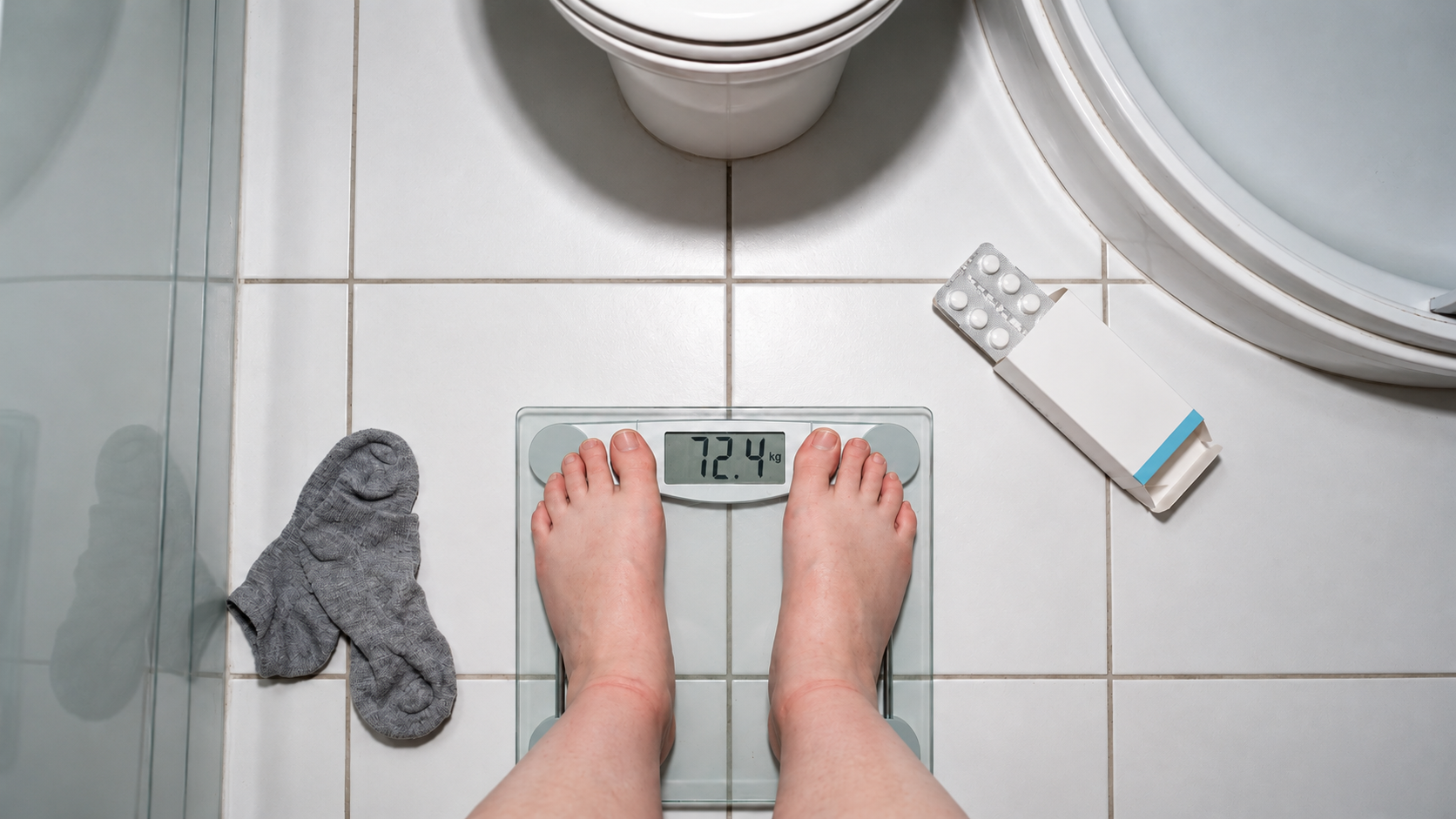
Let me honestly show you what it costs a New Zealand woman to have fibromyalgia treated:
The route via a private pain clinic
Total costs per year: NZ$4,470 to NZ$6,540
And we haven't even included the travel expenses to Auckland, the lost income, and the humiliation of paying hundreds of dollars only to be told that they can't do anything more for you.
The route via alternative treatments
CBD oil: NZ$80 to NZ$165 per month
Total costs per year: NZ$6,100 to NZ$10,250
The route of continuing to take medication and hoping
Repeat prescriptions may be free or low-cost through the public health system, but in the meantime you may have to deal with:
Almost 16 kilos of weight gain due to her nerve-pain medication.
So much brain fog that you forget your own grandchild's birthday.
Two years of misery due to withdrawal symptoms when you eventually have to taper off according to new guidelines.
The real price: your life.
The public health system and the private pain industry thrive on these possibilities.
Do you know why?
Because you keep coming back.
An injection that doesn't work means another injection.
A medicine that doesn't help means another medicine.
Temporary relief means a customer for life.
But this is what really makes them angry...
The price I arranged especially for my readers.

Neuvara should actually be sold for the same amount
To be honest, considering the production costs and New Zealand manufacturing, that is a fair selling price.
But I didn't get involved with this company only to make my readers pay the standard retail price.
So I called the founder and said to him:
“My readers are women like Pauline and Carol. They have already spent thousands of dollars on private clinics and supplements that did nothing. If you want me to attach my name to your product, you have to give them a substantial discount. A very substantial discount.”
He resisted. I stood my ground. For a week, we went back and forth.
That's good.
I'm not going to tell you exactly how much it costs here.
The brand has asked me not to mention the promotional price on publicly accessible pages. They want to prevent major supplement brands and pharmacy chains from taking screenshots of it.
As soon as you click below, you will see the exact amount on the next page.
What I can tell you, however, is that it costs only a fraction of one appointment at a private pain clinic. Less than a week's worth of groceries at the supermarket.
And less than a takeaway meal for two people.
For the only four-in-one magnesium complex in New Zealand specifically formulated to address the underlying causes of fibromyalgia pain simultaneously.
Why the brand agreed to offer my readers this price

When the founder gave me permission to offer this discount to my readers, he wasn't thrilled about it.
He didn't want the bigger pharmacy chains seeing the price my readers get and demanding the same deal for themselves.
So this is the agreement: my readers get access to this price for as long as the brand keeps this page live.
The brand's 60-day guarantee: pain relief or your money back

You spent money on miracle cures that ultimately turned out to be nothing more than expensive nonsense.
That is why I want to show you exactly what the company offers and why I trust it:
Try Neuvara for 60 days. Two full months.
Long enough to test it during all kinds of days of severe pain.
Long enough to see what happens during weather changes, periods of stress, and a severe winter cold.
Long enough so you don't have to think afterwards: “Maybe I just didn't try long enough.”
Take it every morning according to the directions. Experience how your nervous system calms down. How the volume knob of the pain is slowly turned down. How you get your mornings back.
And if you don't wake up one morning and think:
“Damn, I completely forgot for a moment that I have fibromyalgia...”
Then you get every penny back.
No forms. No vouchers. No hassle and no difficult questions.
It didn't work for me.
I asked the founder why they offer a 60-day guarantee, while most supplement companies don't go beyond 30 days.
His answer:
We want to give every customer enough time to truly experience the product. If we cannot deliver what we promise within 60 days, we do not earn their money.
That is the kind of company I dare to send my patients to with confidence.
The return rate remains remarkably low.
The formula works.
End of story.
You are now faced with a choice
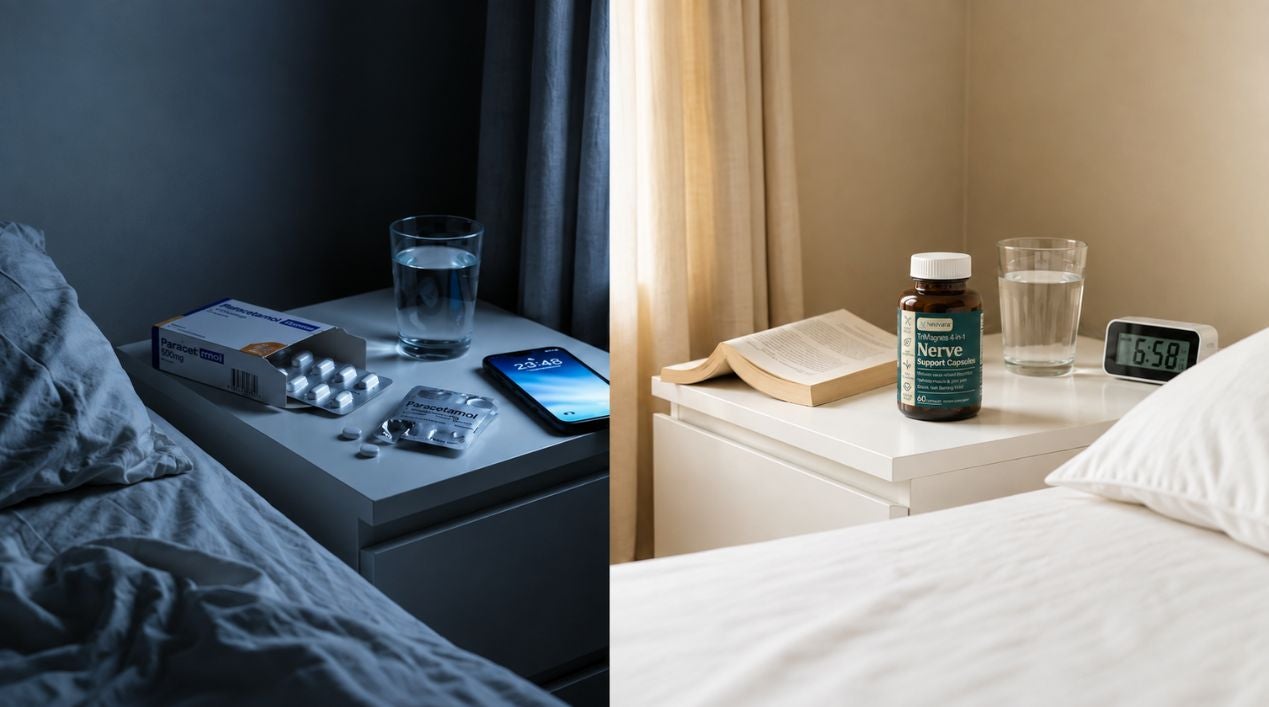
Right now, you are faced with a choice.
Option 1: You continue as you are doing now
You continue taking your nerve-pain medication while you wait for the letter stating that you must stop.
You keep cancelling appointments with your grandchildren.
You keep wearing your hair in a bun because your arms don't have enough strength to lift a hairdryer.
Option 2: you try something that actually works
You spend less than on a takeaway meal on Friday night.
You are choosing the only four-in-one magnesium complex in New Zealand that has been specially formulated for fibromyalgia.
You address the underlying cause instead of just suppressing the symptoms.
To me, the choice seems quite clear.
Because let's be honest: if you do nothing, the symptoms of fibromyalgia often get worse. I have seen it.
And you have probably seen it too in your online fibromyalgia support group.
If you do not take action in time, the next decade may strongly resemble the previous one, but with even less energy, strength, and quality of life.
You can keep wasting time and money on solutions that don't work and eventually end up where Pauline almost ended up.
Either it works as I described, or you get every penny back.
In any case, that is better than giving up hope and doing nothing at all.
This is exactly what you need to do now.

Choose the package that suits you best. A tip: get at least three bottles. This way, you will have sufficient stock when you notice it works, and you will also benefit from a higher discount.
Enter your delivery details. Order before 11:59 pm and your package will be shipped the next working day.
Wait for your order. Within New Zealand, delivery usually takes three to five working days.
Take your first two capsules as soon as the package arrives.
Send the team an email with your experience after a week.
But whatever you do, do not close this page with the thought:
I'll order later.
When you are in pain every day, 'later' does not exist.
Later means another sleepless night.
Cringe again when your grandchild comes running towards you enthusiastically.
Another empty medication strip that you hide at the bottom of the bin.
Your nervous system has waited long enough.
Click below and let's put an end to this together.
With hopeful greetings,
Dr William Harrington
PS Pauline sent me a photo this morning. She was with her grandson Sam at an indoor play paradise in Hamilton.
She stood upright.
She laughed.
And he jumped right into her arms.
In 60 days, you could be standing there.
PPS
I do not receive a commission.
I do not own any shares in the company.
And I am not on their payroll.
I was simply fed up with seeing how women like Pauline and Carol were abandoned by the system.
This is the only formula I have come across that I believe actually does what it promises.
Science is real.
The team in Auckland is real.
And the results are real.

By Dave Mitchell
18.03.2026, 09:56 AEST







Helen Fraser
I'd been dealing with constant fatigue and aching for over two years and had pretty much given up on finding anything that actually helped. After about a week of taking Neuvara I noticed I could get through the afternoon without needing to lie down, something I hadn't done comfortably in ages. Genuinely didn't expect results like this.
Like · Comment ·

14 · 3 hrs
Like · Comment ·
4 · 50 min
Like · Comment ·
14 · 3 hrs

Margot Holloway
Was pretty sceptical because I'd already wasted money on supplements that did absolutely nothing for my pain. But the stiffness started easing faster than I expected and I'm sleeping through the night again for the first time in months. This one's staying in my routine for good.
Like · Comment ·
21 · 6 hrs
Like · Comment ·
4 · 50 min
Like · Comment ·
21 · 6 hrs

Susan Blackwell
I've tried so many different treatments over the years with very little success so my expectations were low. Neuvara was easy to take and I noticed a real difference much faster than I anticipated. My body feels so much more comfortable throughout the day.
Like · Comment ·
11 · 9 hrs
Like · Comment ·
4 · 50 min
Like · Comment ·
11 · 9 hrs

Sharon Fletcher
Has anyone used this alongside their regular medication? Been dealing with worsening pain and fatigue for two years now and seriously considering giving Neuvara a proper go.
Like · Comment ·
4 · 14 hrs
Like · Comment ·
4 · 50 min
Like · Comment ·
4 · 14 hrs

Di Hartley
Sharon, yes, that's exactly my situation. Still on my regular medication, just started taking Neuvara each morning. The stiffness started easing within the first week and my energy is nowhere near as depleted anymore. Genuinely worth giving it a real shot.
Like · Comment ·
11 · 10 hrs
Like · Comment ·
3 · 50 min
Like · Comment ·
11 · 10 hrs

Patricia Dunne
The fatigue and aching I'd had for months eased after just a couple of weeks. It's so simple to take, no complicated routine, no fuss. So glad I finally decided to give this a proper try.
Like · Comment ·
17 · 2 days
Like · Comment ·
4 · 50 min
Like · Comment ·
17 · 2 days
Limited offer for readers:

The information and other content on this page, or in associated materials, is not intended and should not be construed as medical advice, nor is the information a substitute for professional medical expertise or treatment.
If you or anyone else has a medical problem, you should consult your healthcare provider or seek other professional medical care. Never ignore or delay seeking professional medical advice because of anything you have read on this site or in associated materials. If you think you have a medical emergency, call your doctor or 111 immediately.
Copyright © 2026. All rights reserved.